
Keeping aircraft clean is essential for safety, performance, and longevity. However, not all cleaning methods are the same, and choosing the right one can make a big difference.
Two popular methods are wet washing and foam washing, each with its own benefits and best-use scenarios.
Whether you manage a fleet or own a private aircraft, knowing the differences can help you maintain the exterior properly. In this post, we’ll explore both wet and foam washing, comparing their pros, cons, and ideal uses so you can make an informed decision for your aircraft’s care and upkeep.
What is Wet Washing Aircrafts?
Wet washing is traditional aircraft cleaning using a large amount of water, specialized detergent, and mechanical scrubbing. It is the best method to effectively remove contaminants like oil, grime, bugs, and other stubborn dirt.
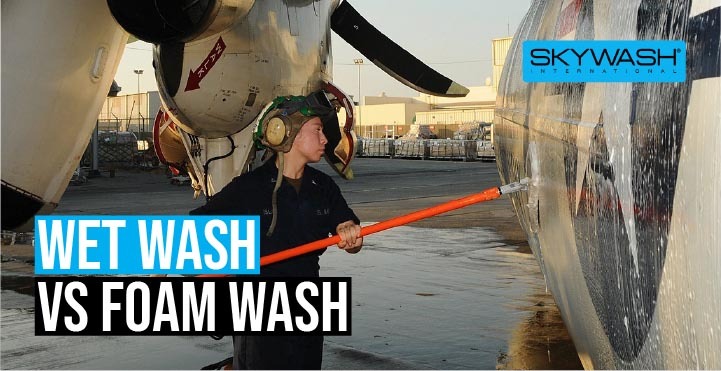
The wet wash cleaning process starts by spraying water over the aircraft and applying a detergent solution. Technicians also use a combination of aircraft cleaning equipment like brushes, sponges, and microfiber cloths to scrub the surface before rinsing the solution.
Advantages of Using Wet Wash
One of the biggest reasons a wet wash is favored is its ability to tackle heavy grime. It leaves a shiny and spotless aircraft, making it ideal before inspections or detailed maintenance checks.
- Heavy-Duty Cleaning Power: The cleaning method excels at removing deep-set grime, oil stains, and contaminants. It is perfect for aircraft that accumulate a lot of dirt from frequent long-distance or transatlantic flights.
- Aesthetic Restoration: It quickly restores a worn or weather-beaten aircraft’s exterior. Wet wash restores its sleek and shiny appearance.
- Customizable with Specialized Products: You can incorporate various cleaning solutions to remove specific contaminants like oil, jet fuel residue, and bird droppings. There is also an option of all-in-one solutions that thoroughly cleanse the aircraft’s exterior.
Challenges in Wet Washing Aircraft
As with any cleaning method, wet washing comes with some trade-offs.
- Water Usage: One of the most significant downsides is the amount of water. Depending on the size of the aircraft, it can range between hundreds to thousands of gallons per wash. In regions with water restrictions and drought, wet washing becomes unsustainable.
- Environmental Impact: Not only is water consumption high, but the wet washing runoff can also carry chemicals and pollutants into the environment. That’s why it is essential to use manufacturer-certified, environment-friendly wet wash solutions to minimize environmental impact.
What is Foam Washing for Aircrafts?
Foam wash is an increasingly popular method that uses foam-based cleaners to lift and remove dirt without the need for excessive water. It involves spraying a thick foam solution onto the aircraft’s surface. The foam clings to the dirt, allowing it to loosen, which is then wiped away with a microfiber cloth or sponge.
The method is less labor intensive and uses less water than a traditional wet wash. Making it an excellent option in areas where water conservation is a priority.
Advantages of Using Foam Wash
Foam washing is gaining traction in aviation because of its quick, eco-friendly, and cost-effective cleaning. It adheres to the aircraft’s exterior, lifting dirt and debris without heavy scrubbing and excessive water.
- Water Conservation: Foam washing uses up to 80% less water than wet washing. It makes it ideal for aircraft stationed in areas with water scarcity or for operators looking to reduce their environmental footprint.
- Quick Turnaround: It generally takes less time than wet washes because there is less water to rinse and dry. Foam washing can be a great advantage for airlines with busy flight operations.
- Less Chemical Runoff: Since less water is used, there is less water to manage, making foam washing an eco-friendly option.
Challenges in Foam Washing Aircraft
- Not as Effective: Foam wash is excellent at removing light-to-moderate dirt but struggles with heavily soiled grease stains, oil, jet fuel, grime, and more. Foam washing can maintain cleanliness but may not be supplemented with deeper cleans like wet washing.
- Frequent Applications: Foam washing is gentler and better suited for routine cleaning. Therefore, to maintain pristine conditions, you will need to clean the aircraft more frequently.
- May Damage the Paint Job: Using manufacturer-certified and aviation authorities like FAA and EASA approved foam washing cleaning products is crucial. Low-quality washing solutions can damage the paint job, leading to significant damage and repair costs.
That’s why it is essential to get only eco-friendly, tested, and widely approved foam washing products like Pro Exterior Heavy-Duty Foam Wash that are effective for your aircraft.
Wet Wash vs Foam Wash: Key Differences
Both Wet and foam wash effectively clean your aircraft; they are designed to tackle different needs and circumstances. So, let’s compare them directly across various important factors to help you make a decision.
| Attributes | Wet Wash | Foam Wash |
| Effectiveness | Wet washing is ideal for heavy-duty aircraft cleaning. It is the go-to method for removing thick grime, fuel stains, and other stubborn debris. | It is suitable for routine cleaning and light-to-moderate dirt removal. However, it is less effective for deep cleaning tasks like grease or oil removal. |
| Environmental Impact | Wet wash requires a large amount of water, which can be a concern in areas with water scarcity. | Foam wash uses significantly less water, making it an environmentally sustainable option. |
| Cost | Wet washing is generally more expensive due to the amount of water, labor, and cleaning solutions required. But it is more thorough and clears even the hardest stains. | Foam wash is considered cost-effective due to reduced labor and water requirements. Foam washes are frequently required to maintain cleanliness, which can offset the savings. |
| Time Efficiency | Wet washing takes longer due to rinsing, cleaning, drying, and extensive scrubbing. | Foam washing is quicker, has less drying time, and does not need excessive rinsing and scrubbing. |
| Aircraft Suitability | Wet washing is recommended for larger aircraft; they accumulate more debris and require extensive cleaning. | Foam washing is well-suited for smaller, private aircraft that fly locally and require frequent but less intensive cleaning. |
When to Choose Wet Wash for Aircraft Cleaning?
Wet washing your aircraft is best when:
- It has endured harsh conditions, such as long-haul flights or exposure to saltwater and pollutants.
- You need to prepare the craft for inspection or detailed maintenance.
- There is a significant buildup of grime, oil, and stubborn substances that foam washing cannot handle.
Wet washing is necessary if you regularly fly in dirty environments or if your aircraft needs to look its best for an important event.
When Foam Wash is the Right Cleaning Option for Aircrafts?
Chose foam wash for aircraft cleaning if:
- You are looking for a quick, efficient cleaning solution for routine maintenance.
- Your aircraft is in a hanger area with limited access to water.
- Environmental concerns and water restrictions are a priority in your region.
The washes are ideal for frequent cleanings, especially if you fly in environments where your aircraft does not accumulate excessive grime or heavy contaminants.
FAQs
Is foam washing safe for all aircraft surfaces?
Yes, foam washing is generally safe for all aircraft surfaces, including delicate windows, paints, and composites. The foamy solution gently lifts contaminants without scrubbing. Hence, scratches and abrasions on the aircraft’s surface will be reduced. Some low-quality foam cleaners can damage the paint job and other delicate surfaces. That’s why it’s vital to source cleaning products certified by aircraft manufacturers and aviation authorities.
What contaminants are better removed with a wet wash?
Wet washing is perfect for removing tough and stubborn contaminants such as oil stains, bird droppings, and carbon buildup. It provides a deeper clean, ideal for aircraft flown through polluted or dirty environments.
Can I combine wet wash and foam wash for better results?
Many aircraft owners and maintenance teams combine both methods for optimal results. A foam wash is used for regular, quick clean-ups between flights. A wet wash is scheduled periodically for a deep clean and to address heavy contaminants.
Does foam wash leave residue on the aircraft?
When done correctly with high-quality foam wash products, no residue should be left on the aircraft. The foam encapsulates the dirt and contaminants, which are then easily rinsed off, leaving the aircraft clean and shiny. However, low-quality foam cleaners can leave a residue. It may not look much, but it can add significant weight and drag, ultimately affecting the aircraft’s performance.
How often should I clean my aircraft with a wet wash?
As mentioned above, a wet wash is ideal for deep cleaning. It can be scheduled less frequently, depending on how often the aircraft flies and the environmental conditions it’s exposed to. Most operators recommend a wet wash twice a year for thorough maintenance. If the plane flies through harsh weather or coastal regions where salt buildup can occur, the number of wet washes can be increased to three or four per year.
Conclusion
Both wet wash and foam wash are excellent at maintaining the aircraft’s cleanliness. However, the choice between both depends on your specific needs, operational demands, and environmental considerations.
If you are dealing with heavy grime and harsh contaminants, a wet wash will likely be your option for a deep, thorough clean. However, a foam wash will meet your quick and efficient cleaning needs that conserve water and time.
To strike a balance, many aircraft owners use foam washing for regular upkeep and wet washing for occasional deep cleaning. Whichever method you choose, a well-maintained and clean aircraft will have a better appearance, improved performance, and longevity.